Fresh vs Healed: How a Realism Tattoo Settles
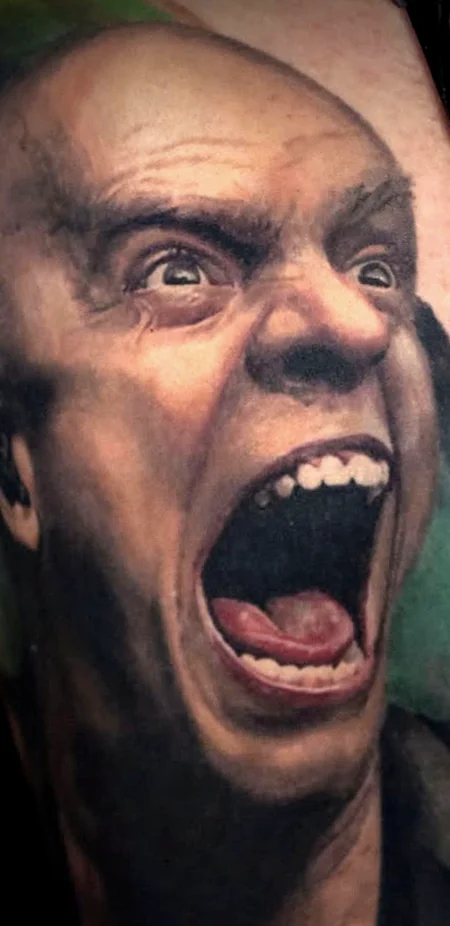
 Fresh
Healed
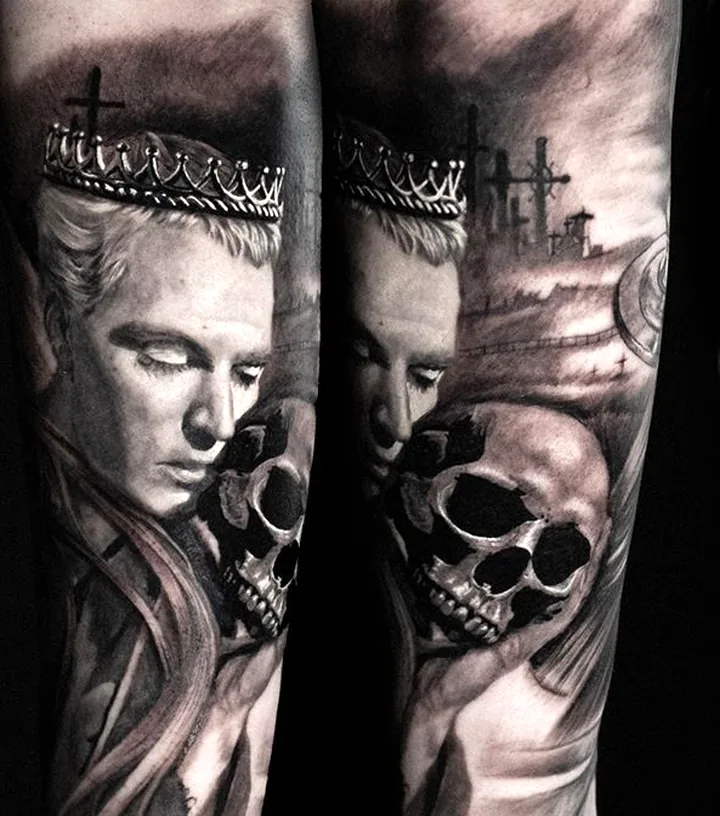
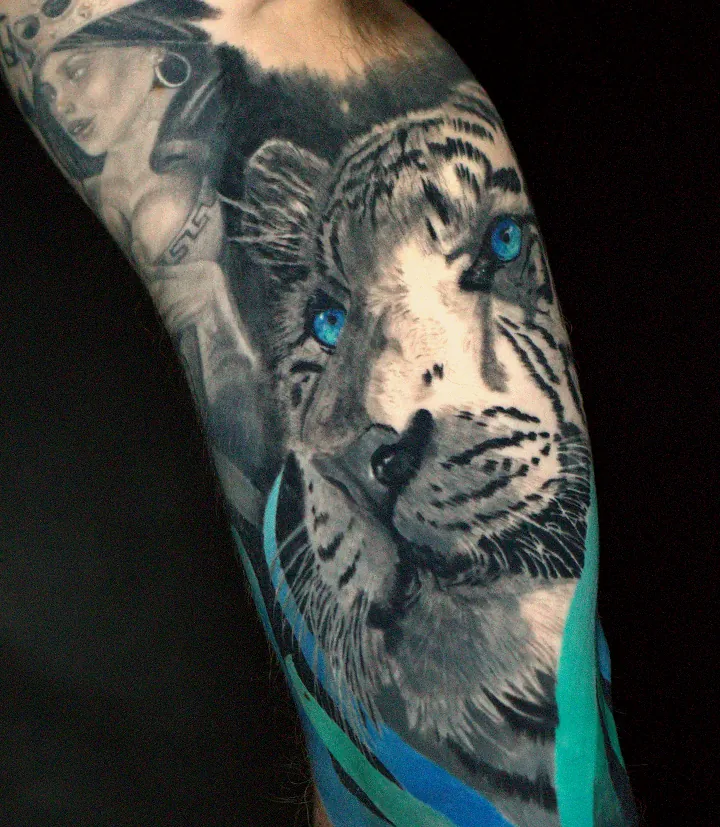
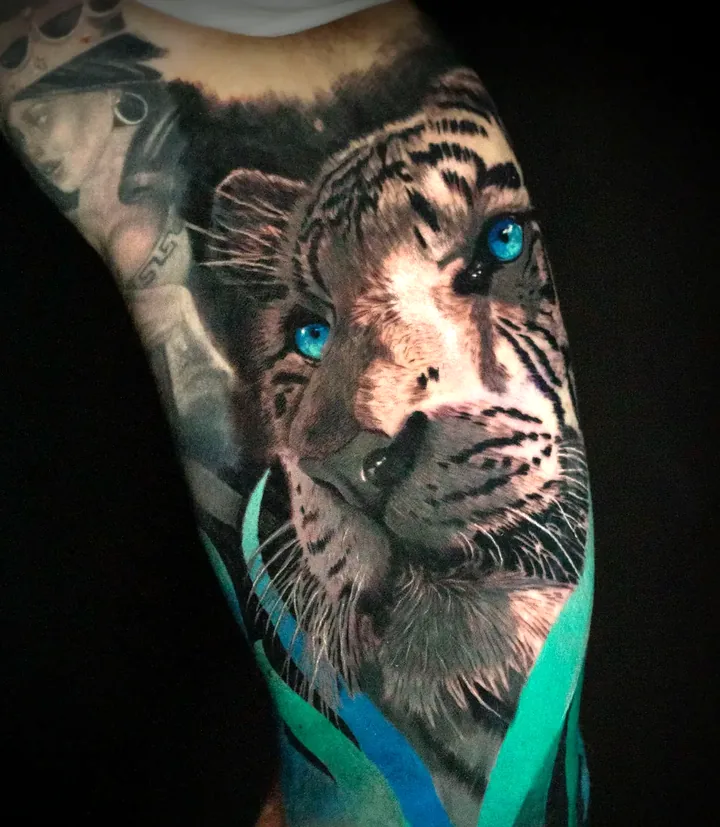
A fresh tattoo never looks the way it will for the rest of its life. On the day, the skin is red, a little swollen and shiny, and the ink sits right at the surface. Over the next weeks the skin heals over it, and the piece settles into its real look. Drag the slider above to see it on my portrait of Devin Townsend, the piece that won Best Realistic at Viken Tattoorama 2025.
What changes as a tattoo heals
- The redness goes. Fresh, the skin around the eyes and mouth is flushed and irritated. Healed, the skin tones read as they were drawn.
- The shine goes. The gloss of a fresh tattoo comes from plasma and ointment on an open wound. Healed skin has a natural, matte surface.
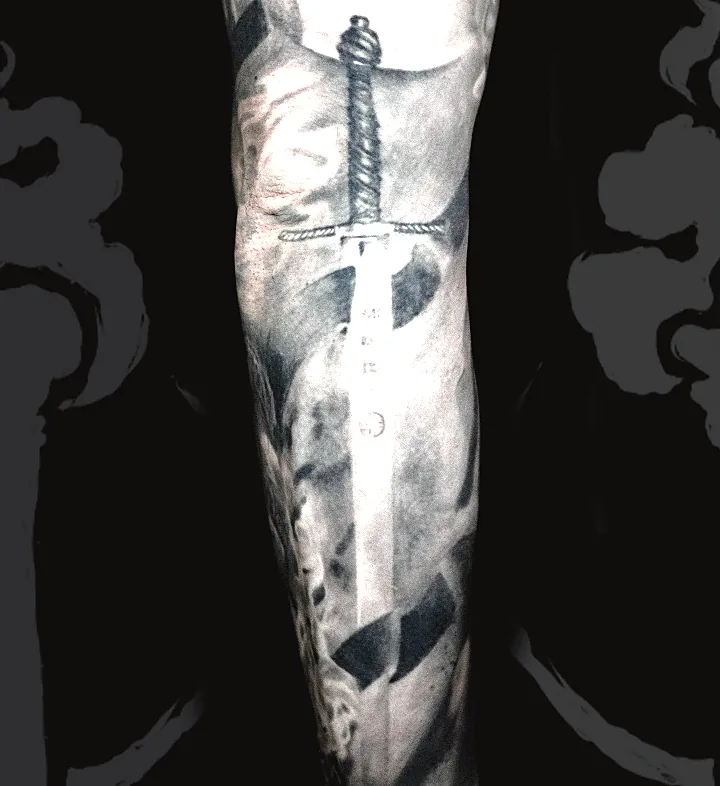
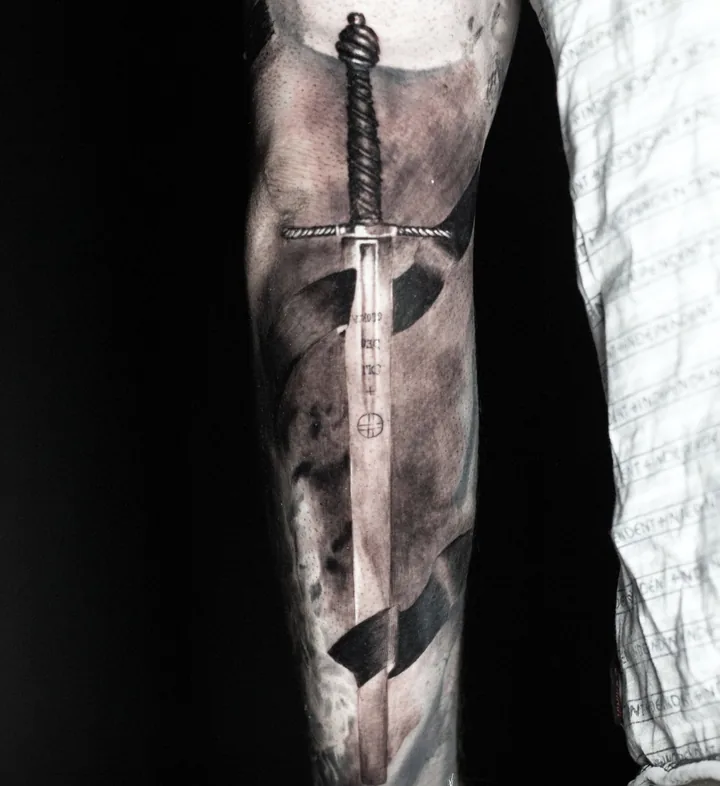
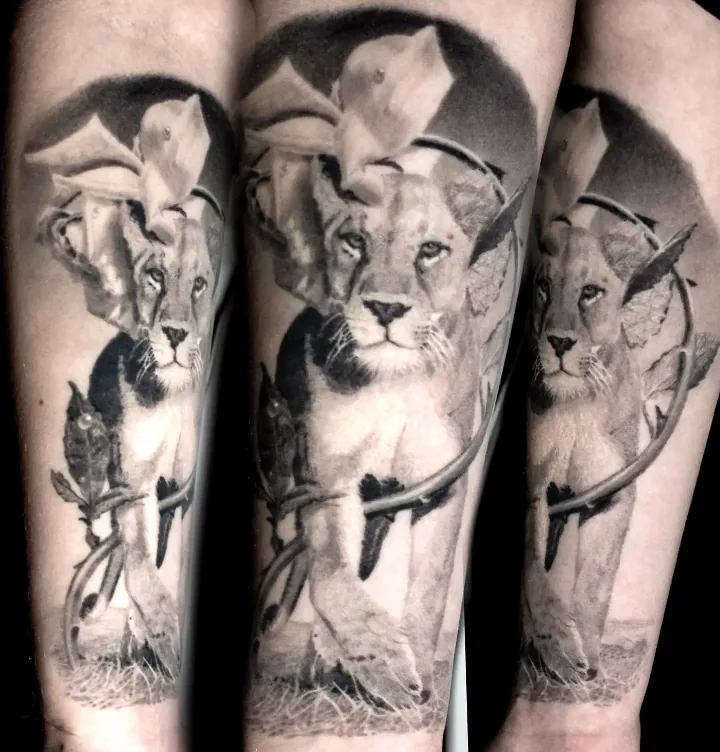
- The shading softens slightly. A new layer of skin forms over the ink, so the transitions look smoother and a touch softer than on the day.
- The contrast stays. Deep blacks and strong colour, like the red of the lips here, carry through healing. That's why realism is built with strong contrast from the start.
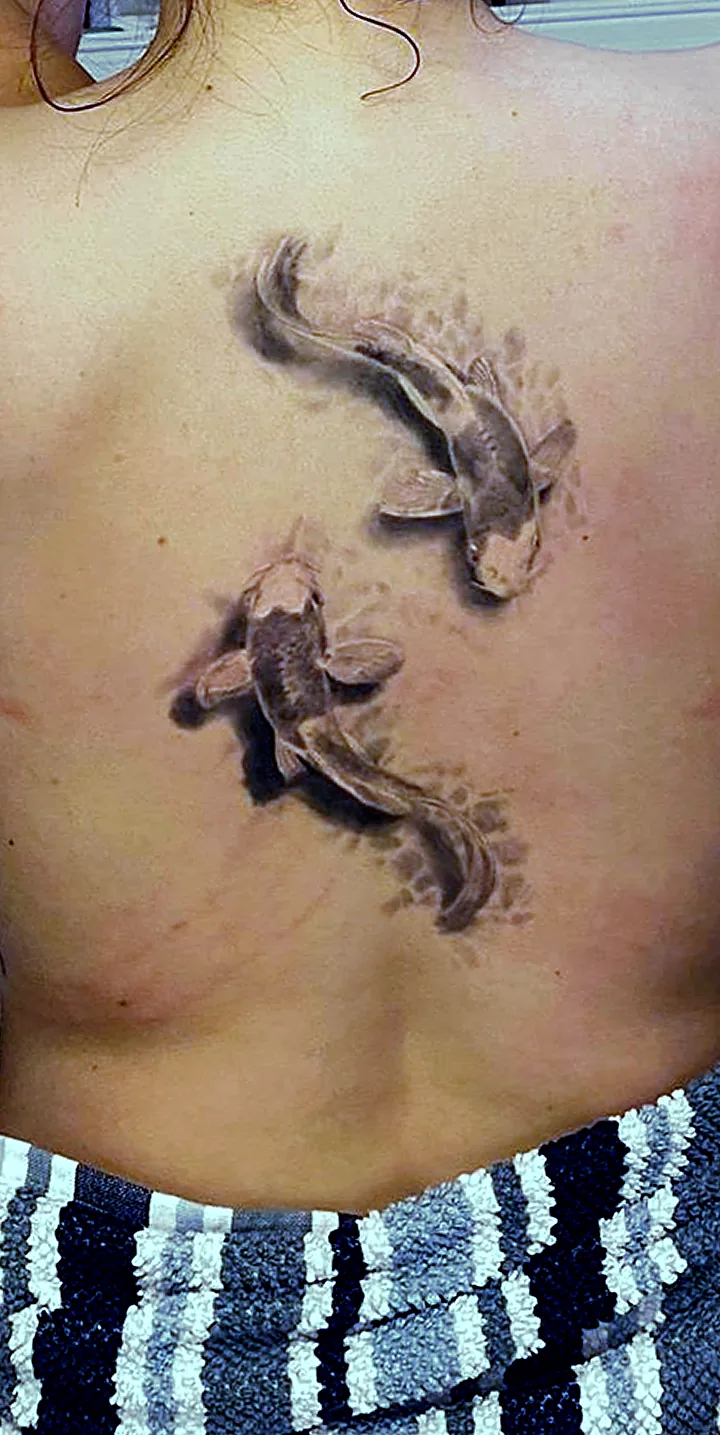
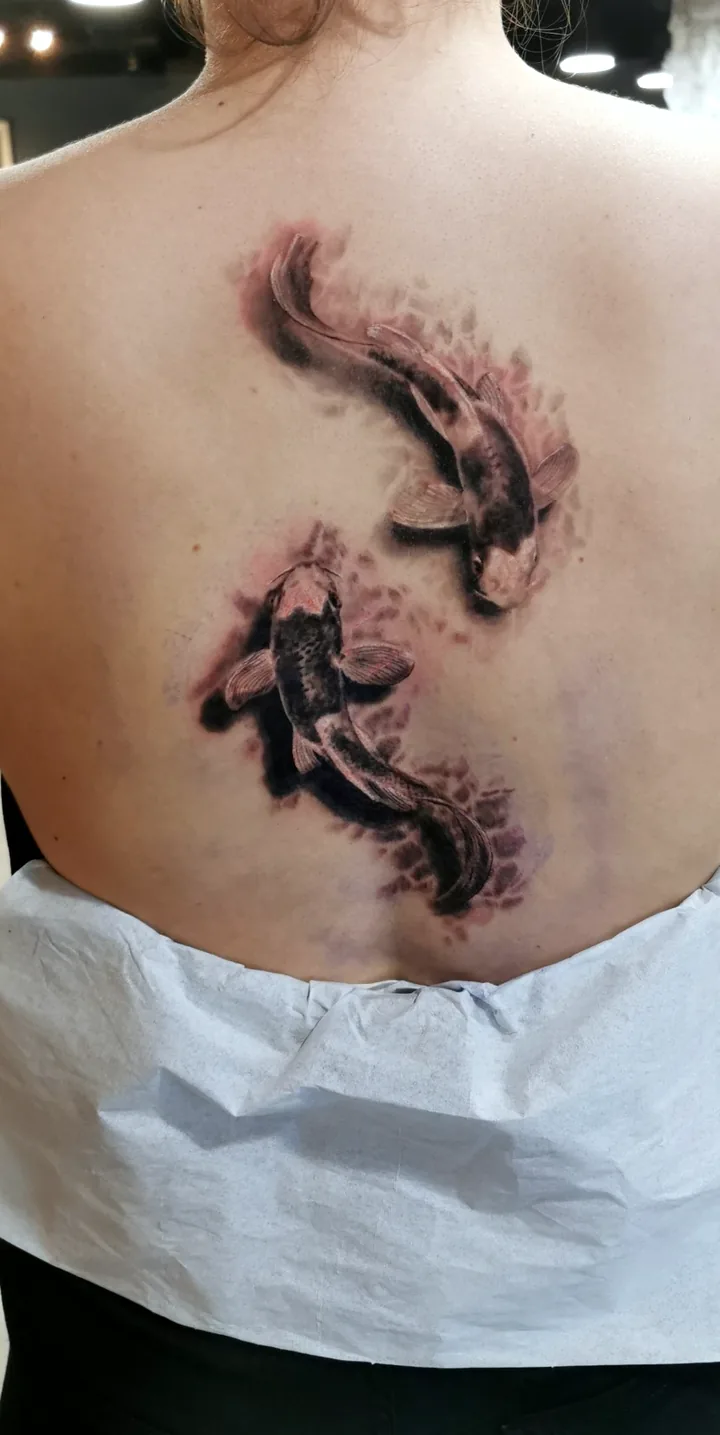 Fresh
Healed
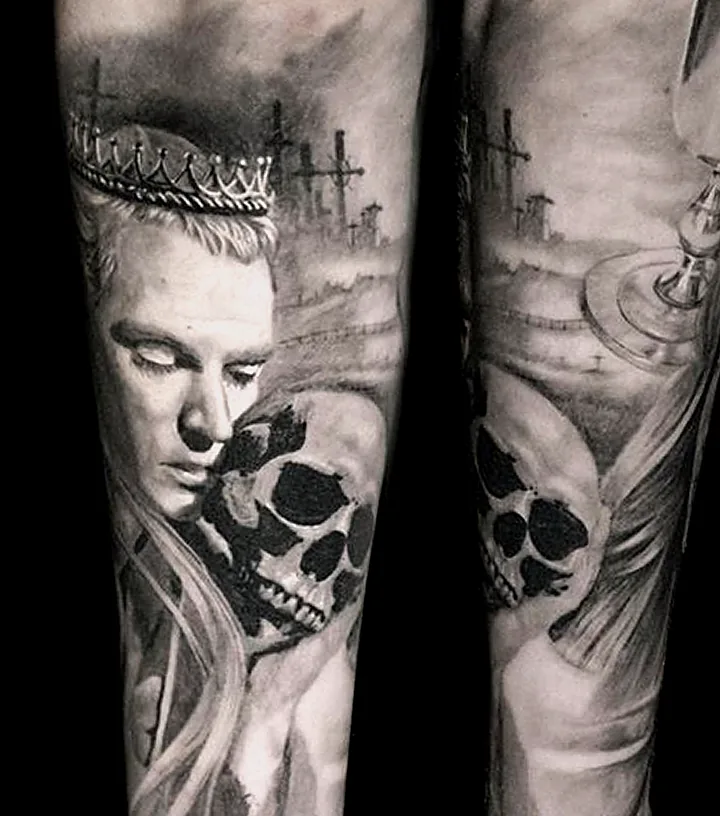
 Fresh
Healed
 Fresh
Healed
 Fresh
Healed

 Fresh
Healed
 Fresh
Healed
More healed work
See them in the galleryThe stages of healing
Days 1–5: red and tender
The tattoo is an open wound. It's red, warm and a bit swollen, and the colours look brighter and harsher than they will be. Leave the protective film on as described in the aftercare guide.
Days 5–14: peeling and itching
The skin flakes and peels like a sunburn, and it itches. Don't scratch or pick: pulling off flakes early can take ink with them.
Weeks 2–4: the cloudy stage
Once the peeling is done, a thin new layer of skin covers the tattoo and can make it look dull, milky or slightly patchy. This is normal, and it clears as the skin matures.
Weeks 4–6: settled on the surface
The surface is healed and the tattoo shows its real look: this is the moment to judge the result.
Up to 6 months: healing underneath
The deeper layers of skin keep healing for months. Keep the tattoo out of strong sun, and use SPF 50 once it's healed, so the shading stays crisp.
When to judge your tattoo
Wait until it's fully healed, at least 4–6 weeks. Before that, redness, peeling and the cloudy stage all make a tattoo look different from how it will end up. If a spot still looks patchy after that, send me a photo and we'll look at it together.
What helps it heal well
- Follow the aftercare routine closely for the first two weeks.
- Don't scratch, pick or peel.
- Keep it out of baths, pools and the sea for at least two weeks.
- Keep it out of the sun, then protect it with SPF 50 for life.
- Come to your session rested and well fed: see how to prepare for a tattoo.